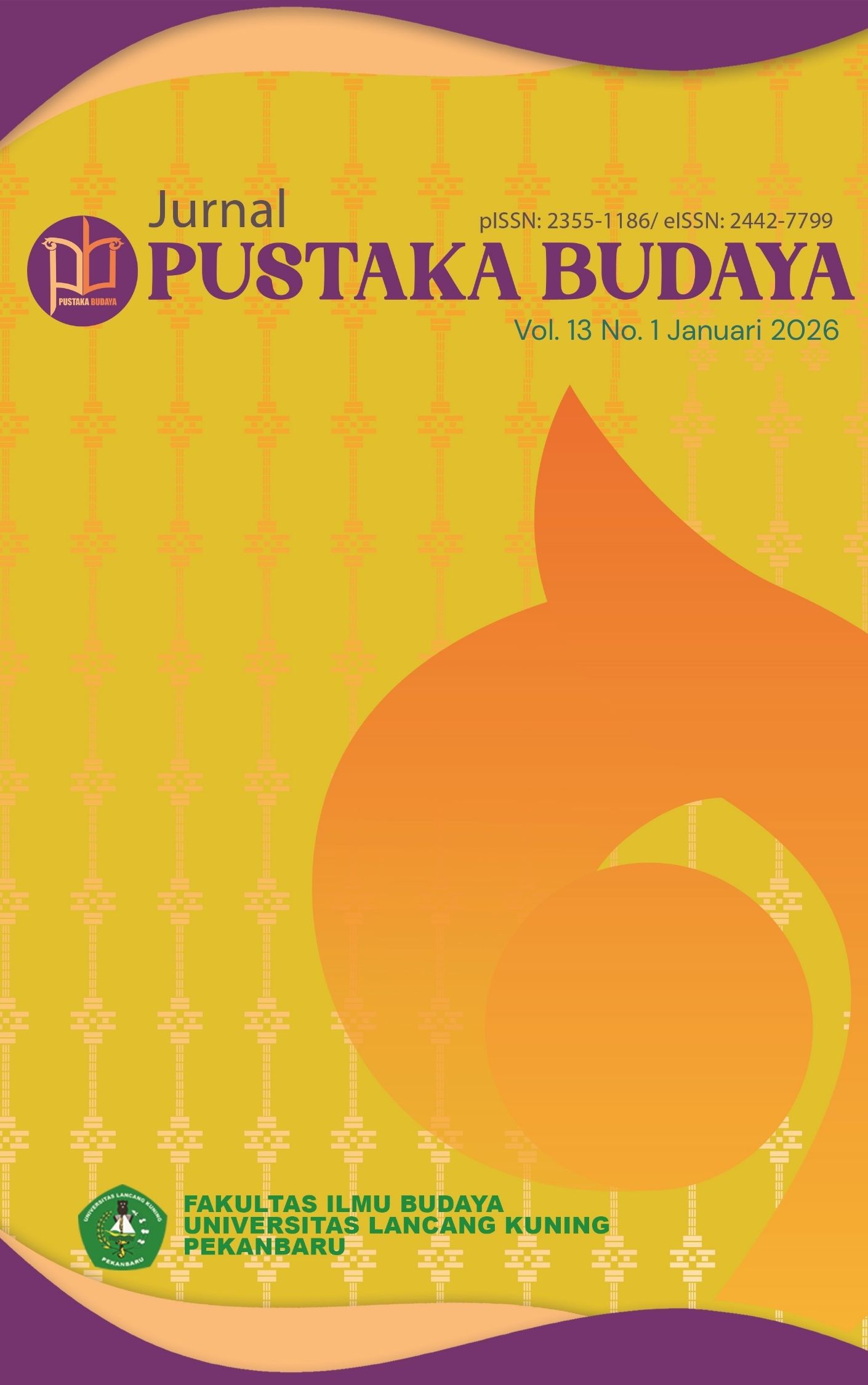
Pengaruh Kompetensi Pustakawan Terhadap Kepuasan Pemustaka dengan Fasilitas Perpustakaan Sebagai Variabel Intervening
DOI:
https://doi.org/10.31849/avs0a353Keywords:
Librarian Competence , Library Facilities , User SatisfactionAbstract
This study aims to analyze the influence of librarian competence on user satisfaction, with library facilities serving as a mediating variable. In the current era of rapid digital transformation, libraries face significant pressure to remain relevant, requiring librarians to possess not only specialized technical expertise in information management but also strategic managerial skills in maintaining and optimizing physical and digital infrastructure to enhance overall service quality. The research employs a quantitative approach utilizing an explanatory survey method. Data were collected through structured questionnaires distributed to 192 respondents, selected using a purposive sampling technique to ensure data representativeness. Data analysis was performed using Partial Least Squares Structural Equation Modeling (PLS-SEM) via SmartPLS 4.0 software to test both direct and indirect relationships within the structural model. The results demonstrated that: (1) Librarian competence has a positive and significant effect on user satisfaction (T=6.903); (2) Librarian competence has a positive and significant effect on library facilities (T=15.906); (3) Library facilities have a positive and significant effect on user satisfaction (T=7.353; and (4) Library facilities are proven to significantly mediate the influence of librarian competence on user satisfaction (T=6.698). The research model achieved a Q-Square value of 0.932, indicating exceptionally strong predictive relevance. These findings confirm that the integration of highly competent human resources and optimal facility management is a critical strategy for fostering user satisfaction. Practically, the study suggests that library institutions must prioritize continuous professional development to ensure staff can effectively leverage facilities to meet evolving user expectations
References
Darmono. (2015). Manajemen Perpustakaan Sekolah: Strategi Mengelola Perpustakaan Modern. Grasindo.
Fahmi, I. (2016). Perilaku Organisasi: Teori, Aplikasi, dan Kasus. Alfabeta.
Feviasari, H., Tholkhah, I., & Norman, E. (2022). Pengaruh Kualitas Pelayanan dan Fasilitas Perpustakaan terhadap Kepuasan Pengguna di Institut Agama Islam Nasional Laa Roiba Bogor. Tarbiatuna: Journal of Islamic Education Studies, 3(1), 58–77. https://doi.org/10.47467/tarbiatuna.v3i1.2177
Ghozali, I. (2014). Structural Equation Modeling, Metode Alternatif dengan Partial Least Square (PLS) (4th ed.). Badan Penerbit Universitas Diponegoro.
Ghozali, I., & Latan, H. (2015). Partial Least Squares, konsep, teknik dan aplikasi menggunakan program SmartPLS 3.0 untuk penelitian empiris. Badan Penerbit Universitas Diponegoro.
Hair, J. F., Hult, G. T. M., Ringle, C. M., & Sarstedt, M. (2021). A primer on partial least squares structural equation modeling (PLS-SEM) (3rd ed.). Sage Publications.
Hasugian, J. (2018). Dasar-Dasar Bibliografi: Pengembangan Koleksi Digital. USU Press.
Hidayat, R. (2019). Manajemen Perpustakaan: Teori dan Praktis. Rajawali Pers.
Ismail. (2024). Pengaruh Kinerja Pustakawan Terhadap Kepuasan Pemustaka Pada UPT Perpustakaan Pusat Universitas Muhammadiyah Makassar. [Universitas Muhammadiyah Makassar]. https://digilibadmin.unismuh.ac.id/upload/42117-Full_Text.pdf?utm_source=chatgpt.com
Khoirot, K. (2021). Pengaruh Fasilitas Perpustakaan terhadap Kepuasan Pemustaka di perpustakaan UIN Sumatera Utara Medan [UIN Sumatera Utara Medan]. In Universitas Islam Negeri Sumatera Utara. http://repository.uinsu.ac.id/id/eprint/14683%0Ahttp://repository.uinsu.ac.id/14683/1/Skripsi Khoirot_0601162028_FIX.pdf
Ladhari, R. (2009). A review of twenty years of SERVQUAL research. International Journal of Quality and Service Sciences, 1(2), 172–198.
Lasa. (2017). Manajemen Perpustakaan Profesional. Gadjah Mada University Press.
Lasnawati. (2021). Pengaruh Kompetensi Pustakawan dan Iklim Organisasi Terhadap Kualitas Pelayanan Serta Implikasinya Terhadap Kepuasan Pemustaka pada Perpustakaan Perguruan Tinggi Universitas Muhammadiyah Pringsewu (UMPRI) [Institut Informatika dan Bisnis Darmajaya Bandar Lampung]. http://repo.darmajaya.ac.id/8118/
Margono, S. (2019). Manajemen Personalia dalam Organisasi Informasi. Remaja Rosdakarya.
Mariani, A., Mustar, S., & Iswanto, R. (2024). Pengaruh Kompetensi Pustakawan, Kinerja Pustakawan terhadap Kualitas Pelayanan Perpustakaan di IAIN Curup. Institut Agama Islam Negeri (IAIN) Curup.
Pahlaweni, E. (2025). Peran Self-Efficacy Terhadap Job Crafting Dengan Person Job-Fit Sebagai Variabel Mediasi. Universitas Lancang Kuning.
Pendit, P. L. (2014). Perpustakaan Digital: Kesinambungan dan Dinamika. Cita Karyasindo.
Philip, K., & Lane, K. K. (2016). Marketing Management (15th ed.). In Marketing Management (15th ed.). Pearson Education.
Prasetyo, A., & Nuryani, S. (2021). Pengaruh Sarana Prasarana dan Kualitas Layanan terhadap Kepuasan Pemustaka di Perpustakaan Nasional RI. Jurnal Informasi Dan Perpustakaan, 9(2), 145–158.
Rahayuningsih, F. (2015). Pengelolaan Perpustakaan. Graha Ilmu.
Rodin, R. (2020). Manajemen Perpustakaan Digital. Rajawali Pers.
Rofiqi, M. (2025). Pengaruh Beban Kerja Terhadap Kinerja Pegawai Dengan Kelelahan Kerja Sebagai Variabel Intervening. Universitas Lancang Kuning.
Saleh, A. R. (2021). Manajemen Perpustakaan. Universitas Terbuka.
Setianingsih, E., & Asmianto, A. (2024). Analisis Faktor Kualitas Pelayanan yang Berpengaruh Terhadap Tingkat Kepuasan Pemustaka. MATHunesa: Jurnal Ilmiah Matematika, 12(1), 38–48. https://doi.org/10.26740/mathunesa.v12n1.p38-48
Sinaga, D. (2014). Mengelola Perpustakaan Sekolah. Bejana.
Siregar, A. R. (2019). Perpustakaan Energi Pembangunan Bangsa. USU Press.
Sugiyono. (2019a). Metode Penelitian Kuantitatif Kualitatif dan R & D. Alfabeta.
Sugiyono. (2019b). Statistika untuk Penelitian. Alfabeta.
Sutarno, N. S. (2015). Perpustakaan dan Masyarakat. Sagung Seto.
Sutarno, N. S. (2018). Perpustakaan dan Masyarakat. Sagung Seto.
Suwarno. (2018). Manajemen Sumber Daya Manusia di Perguruan Tinggi. Rajawali Pers. https://doi.org/10.17509/jap.v3i2.6120
Suwarno, W. (2016). Psikologi Perpustakaan. Sagung Seto.
Tjiptono, F. (2019). Strategi Pemasaran Prinsip dan Penerapan. Andi Offset.
Tjiptono, F., & Chandra, G. (2016). Service, Quality & Satisfaction. Andi Offset.
Wahyuni, S. (2020). Hubungan Kompetensi Pustakawan dengan Kepuasan Pemustaka di Era Digital. Libraria: Jurnal Perpustakaan, 8(1), 22–35.
Wansyah, A., Saputra, H. E., & Maryaningsih. (2025). Pengaruh Kompetensi Pustakawan Terhadap Kualitas Layanan Perpustakaan Pada Dinas Perpustakaan dan Kearsipan Provinsi Bengkulu. Jurnal Professional, 12(1), 459–464. https://doi.org/10.24252/literatify.v5i1.35160
Yusuf, P. M., & Iswahyudi. (2019). Manajemen Perpustakaan: Teori dan Praktis. Prenada Media.
Downloads
Published
Issue
Section
License
Copyright (c) 2026 Author and Journal

This work is licensed under a Creative Commons Attribution-NonCommercial-NoDerivatives 4.0 International License.
1. Jurnal Pustaka Budaya is an electronic journal that freely available. Papers that submitted to this journal are published under the terms of the Creative Commons License. The terms of the license are:
- Attribution. The licensor permits others to copy, distribute, display, and perform the work. In return, licensees must give the original author credit.
- Noncommercial. Others permits to copy, distribute, display, and perform the work as long as not use the work for commercial purposes — unless they get the licensor's permission.
- No Derivative Works. The licensor permits others to copy, distribute, display and perform only unaltered copies of the work -- not derivative works based on it.
The full terms of the Creative Commons License please see at their Web site.
No claim on copyright is made by the publisher. Persons or publishers wishing to download a paper for whatever use (other than personal study) must contact the author for permission.
2. However, in submitting to Jurnal Pustaka Budaya, authors agree to their paper being published under the terms set out above.
3. It is assumed that, when an author submits a paper to Jurnal Pustaka Budaya, he or she is the legal copyright holder and no other claim to the copyright exists.