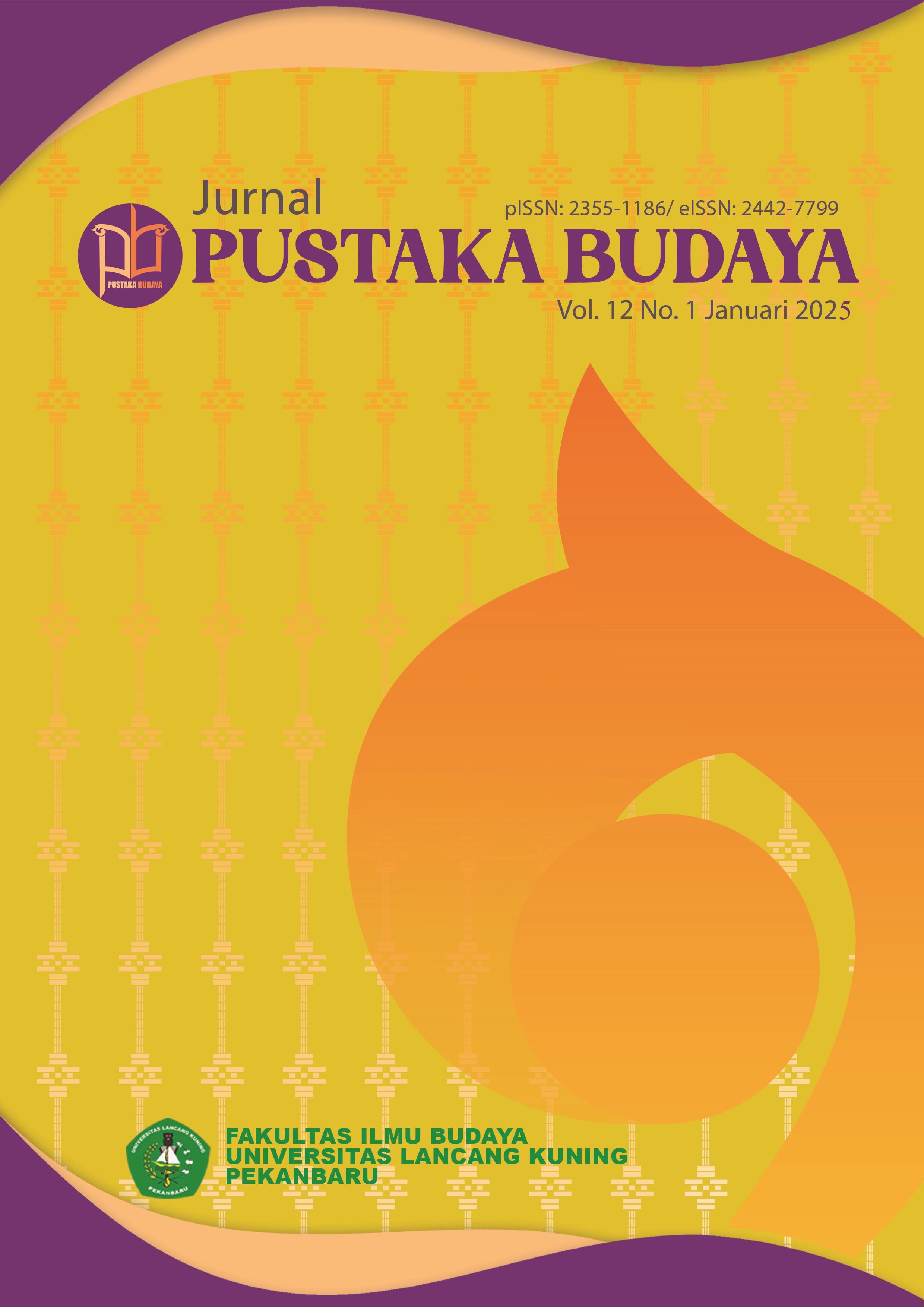
Trend Publikasi Tentang Peran Media Sosial Dalam Aktivisme Pendekatan Bibliometrik
DOI:
https://doi.org/10.31849/pb.v12i1.23913Keywords:
Analisis kata kunci, Bibliometrik, Peran media sosial, AktivismeAbstract
Today's human life cannot be separated from the role of social media, including in the world of activism. Social media which tends to be "free" and can be used to convey opinions and express oneself presents a space that can be used as a space for the development of activism itself. This development has been highlighted by several researchers, who have presented articles on this topic. This study aims to determine publications trends that emphasize the role of social media in activism activities. The research method is carried out quantitatively by taking a bibliometric approach. Researchers use purposive sampling techniques by setting language limitations, namely English. Data analysis activities are carried out using the help of the biblioshiny program with data taken from Scopus. The results obtained based on the three keywords, namely "social media", "social media role", and "activism", include 585 articles in the 2013-2023 period with the article document type. The article entitled “Unpacking the Use of Social Media for Protest Behavior: The Roles of Information, Opinion Expression, and Activism” written by Valenzuela, 2013 is one of the articles with the most citations, namely 372 citations and the USA is one of the regions that produce the most research with a similar theme. However, the publications trend on the role of social media in activism will continue to grow along with the increasingly diverse use of social media.
References
Asmawanti S, D., & Soya, M. (2023). Bibliometric Analysis of Good Government Governance in Indonesia from 2015-2020. Monex –Journal of Accounting Research, 12(01). https://ejournal.poltektegal.ac.id/index.php/monex/article/view/3760/2248
Ashraf, H. M., Al-Sobhi, S. A., & El-Naas, M. H. (2022). Mapping the desalination journal: A systematic bibliometric study over 54 years. Desalination, 526(August 2021), 115535. https://doi.org/10.1016/j.desal.2021.115535
Baer, H. (2018). Redoing feminism: Digital activism, body politics, and neoliberalism. In Digital Feminisms (pp. 25-42). Routledge.
Brady, W. J., Crockett, M. J., & Van Bavel, J. J. (2020). The MAD model of moral contagion: The role of motivation, attention, and design in the spread of moralized content online. Perspectives on Psychological Science, 15(4), 978-1010.
Brown, M., Ray, R., Summers, E., & Fraistat, N. (2017). # SayHerName: A case study of intersectional social media activism. Ethnic and Racial Studies, 40(11), 1831-1846.
Callon, M., Courtial, J. P., & Laville, F. (1991). Co-Word Analysis as a Tool for Describing the Network of Interactions between Basic and Technological Research: The Case of Polymer Chemistry.AK Journal, 22(1), 155-205
Cotton, M., Rattle, I., & Van Alstine, J. (2014). Shale gas policy in the United Kingdom: An argumentative discourse analysis. Energy Policy, 73, 427-438.
Eduardo, A., Oliveira., Maria, Christina, L., Oliveira., Enrico, A., Colosimo., Daniella, Reis, Barbosa, Martelli., Ludmila, R, Silva., Ana, Cristina, Simões, e, Silva., Hercílio, Martelli-Júnior. (2022). Global scientific production in the pre-Covid-19 Era: An analysis of 53 countries for 22 years.. Anais Da Academia Brasileira De Ciencias, 94 suppl 3(suppl 3): e20201428. doi: 10.1590/0001-3765202220201428
Elwood, S., & Leszczynski, A. (2013). New spatial media, new knowledge politics. Transactions of the Institute of British Geographers, 38(4), 544-559.
Fiandari, Y. R. (2022). Analisis bibliometrik publikasi perkembangan penelitian pemasaran digital kosmetik halal. BACA: Jurnal Dokumentasi Dan Informasi, 43(2), 95-111.
Gladwell, M. (2010, October 4). SMALL CHANGE: Why the revolution will not be tweeted. Diambil kembali dari The New Yorker: http://www.newyorker.com/ reporting/2010/10/04/101004fa_fact_ gladwell?currentPage=1
Glanzel, W. (2003). Bibliometrics as a research field a course on theory and application of bibliometric indicators.
Gonzalez, D. V. (2022). Embodiment in activist images: Addressing the role of the body in digital activism. Media, Culture & Society, 44(2), 247-265.
Hartoyo, N., & Supriadi, D. (2015). AKTIVISME SOSIAL MELALUI PENGGUNAAN MEDIA SOSIAL: STUDI KASUS ASOSIASI IBU MENYUSUI INDONESIA (AIMI). Jurnal Kajian Komunikasi, 3(1), 1-11. doi:http://dx.doi.org/10.24198/jkk.v3i1.7388
H. H Karunia, N. Ashri, and Irwansyah, “Fenomena Penggunaan Media Sosial: Studi Pada Teori Uses and Gratification,” Jurnal Teknologi Dan Informasi Bisnis, vol. 3, no. 1, pp. 92–104, Jan. 2021, doi: 10.47233/jteksis.v3i1.187.
J., Vasanthi. (2015). Role of social media in dissemination of information. Indian Journal of Science, 21(74):499-502.)
Jackson, S. J., & Foucault Welles, B. (2015). Hijacking# myNYPD: Social media dissent and networked counterpublics. Journal of communication, 65(6), 932-952.
José, Alberto, Ferreira, de, Andrade, Júnior., Alexandre, Ferreira, de, Pinho., Josiane, Palma, Lima. (2022). Mapa científico por análise bibliométrica da sinergia entre simulação baseada em agentes e logística urbana utilizando bibliometrix. Anais ... Encontro Nacional de Engenharia de Produção, doi: 10.14488/enegep2022_tn_st_383_1896_43937
Judijanto, L., & Auliani, R. (2024). Bibliometric Analysis of Biotechnology Development. West Science Nature and Technology, 2(02), 108–117. https://doi.org/10.58812/wsnt.v2i02.992
Kaplan, Andreas M; Michael Haenlein.2010. “Users of the world, unite! The challenges and opportunities of social media”. Business Horizons 53: 59:68.
Kurdi, M., & Kurdi, M. (2021). Analisis Bibliometrik dalam Penelitian Bidang Pendidikan: Teori dan Implementasi. Journal on Education, 3(4), 518-537. https://doi.org/10.31004/joe.v3i4.2858
Lancaster, F.W. The Measurement and Evaluation of Library Services. Washington D.C.:Information Resources Press, 1977.
Luca, De, Fiore. (2023). [Who is the author of a scientific article?]. Recenti progressi in medicina, 114 1(1):773-778. doi: 10.1701/3939.39225
Magna, Manjareeka. (2023). Evaluation of researchers: H-Index or G-Index which is better?. 1(1):34-34. doi: 10.4103/jimr.jimr_11_22
Mahdiyoun, S. A., Mokhtari, H., & Esmaeilzadeh, M. (2021). Classic Papers in Critical Care: A Bibliometric Analysis. Library Philosophy and Practice, 2021, 1-12.
Matheus, R, Grasselli. (2022). Activism. The Wiley‐Blackwell Encyclopedia of Social and Political Movements, 1-3. doi: 10.1002/9780470674871.wbespm002.pub2
Putri, A. K. (2021). Analisis Bibliometrik Pada Pengaruh Berita Di Media Sosial Terhadap Perilaku Remaja Di Lingkungan Masyarakat. Jurnal Common, 5(2), 108-117.
Rafiq, A. (2020). Dampak media sosial terhadap perubahan sosial suatu masyarakat. Global Komunika: Jurnal Ilmu Sosial Dan Ilmu Politik, 3(1), 18-29.
Rahmadanita, A. (2023). TREN PENELITIAN KETERTIBAN UMUM (PUBLIC ORDER): SEBUAH PENDEKATAN BIBLIOMETRIK. Jurnal Tatapamong, 81-100.
Resqi, M. (2022). Komunikasi Pemasaran: Studi Bibliometrik Dalam Penggunaan Teknologi Dan Media Sosial Untuk Pemasaran. Management Studies and Entrepreneurship Journal (MSEJ), 3(6), 4194-4203.
Romeo, Meštrović., Branislav, Dragović. (2023). Extensions of Egghe g-index: Improvements of Hirsch h-index. arXiv.org, abs/2303.10011 doi: 10.48550/arXiv.2303.10011
Rotman, D., Viewe, g. S., Yardi, S., Chi, E., Preece, J., Shneiderman, B., et al. (2011). From slacktivism to activism: participatory culture in the age of social media. Proceedings of the 2011 annual conference extended abstracts on Human factors in computing systems. New York, NY, USA: ACM.
Sandoval-Almazan, R., & Gil-Garcia, J. R. (2014). Towards cyberactivism 2.0? Understanding the use of social media and other information technologies for political activism and social movements. Government information quarterly, 31(3), 365-378.
Stefan, Popa., Cătălina, Florentina, Popa., Ana, Alexandra, Olariu., Andreea, Breazu. (2023). The Balanced Scorecard: A Bibliometric Approach. doi: 10.24818/basiq/2023/09/002
Tanase, Tasente. (2023). The role of Social Media in the development of the communication strategy of public institutions. Ars aequi, 12:280-288. doi: 10.47577/10.1234/arsaequi.12.1.232
Valenzuela, S. (2013). Unpacking the use of social media for protest behavior: The roles of information, opinion expression, and activism. American behavioral scientist, 57(7), 920-942.
Vasi, I. B., Walker, E. T., Johnson, J. S., & Tan, H. F. (2015). “No fracking way!” Documentary film, discursive opportunity, and local opposition against hydraulic fracturing in the United States, 2010 to 2013. American Sociological Review, 80(5), 934-959.
Wulansari, Y. D., Afcarina, J. S., Zahrafani, S. A. W., & Afifah, W. (2024). Pengaruh Media Sosial terhadap Konstruksi Identitas Mahasiswa Universitas Jember. AKADEMIK: Jurnal Mahasiswa Humanis, 4(2), 336-346.
Downloads
Published
Issue
Section
License
1. Jurnal Pustaka Budaya is an electronic journal that freely available. Papers that submitted to this journal are published under the terms of the Creative Commons License. The terms of the license are:
- Attribution. The licensor permits others to copy, distribute, display, and perform the work. In return, licensees must give the original author credit.
- Noncommercial. Others permits to copy, distribute, display, and perform the work as long as not use the work for commercial purposes — unless they get the licensor's permission.
- No Derivative Works. The licensor permits others to copy, distribute, display and perform only unaltered copies of the work -- not derivative works based on it.
The full terms of the Creative Commons License please see at their Web site.
No claim on copyright is made by the publisher. Persons or publishers wishing to download a paper for whatever use (other than personal study) must contact the author for permission.
2. However, in submitting to Jurnal Pustaka Budaya, authors agree to their paper being published under the terms set out above.
3. It is assumed that, when an author submits a paper to Jurnal Pustaka Budaya, he or she is the legal copyright holder and no other claim to the copyright exists.