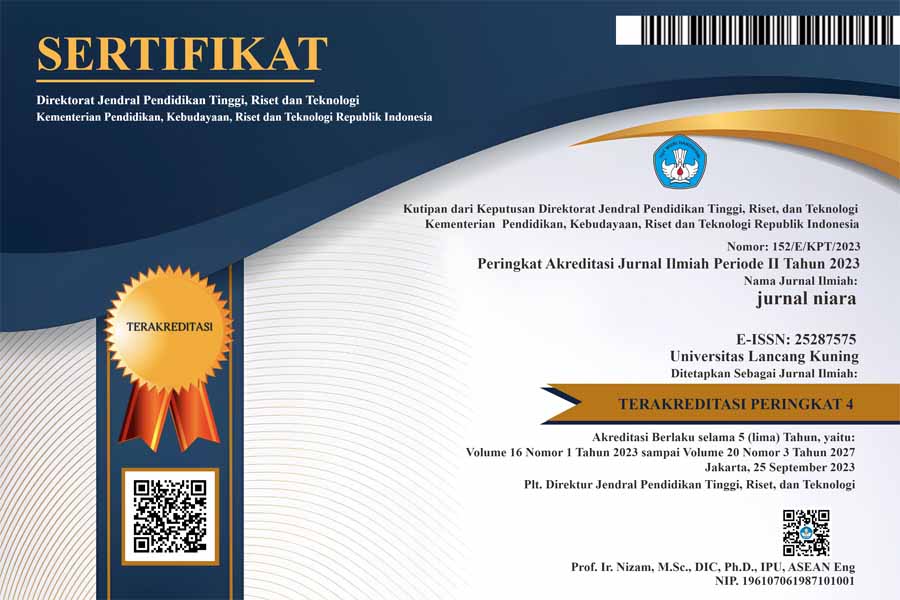
Penerapan Lembaga Constitutional Importance Pada Komisi Nasional Hak Asasi Manusia
DOI:
https://doi.org/10.31849/niara.v17i3.23379Keywords:
Keywords: Constitutional Interests, Komnas HAM, Independent State InstitutionsAbstract
Implementation of the concept of constitutional interest institutions in the National Human Rights Commission (Komnas HAM) in Indonesia. This is the response of independent state institutions in response to public confidence in the global trade and Commerce watchdog on human rights issues. The purpose of the study was to analyze the relationship of Komnas HAM as an institution of constitutional interest in the Indonesian Constitutional system. The method used is normative juridical research with data collection techniques through literature studies. Development involves the concept of independent state institutions, guidelines for the development of these institutions, as well as regulations and guidelines of Komnas HAM as an institution that has constitutional importance. The results showed that Komnas HAM has an equal position with other state institutions and plays a role in maintaining the balance of power and protecting human rights in accordance with constitutional principles. This investigation concluded that the authority of Komnas HAM as an institution of constitutional importance affects Indonesia's commitment to human rights protection and helps enforce checks and balances in the constitutional system.
References
Ahmad Yani. (2018). Sistem Pemerintahan Indonesia: Pendekatan Teori Dan Praktek Konstitusi Undang-Undang Dasar 1945. Jurnal Ilmiah Kebijakan Hukum, 12(2), 119.
Bustamin Bustamin, & Jaya, R. (2019). Urgensi Checks And Balances Ketatanegaraan Indonesia Dan Islam. JURIS (Jurnal Ilmiah Syariah), 18(2), 221–32. https://doi.org/https://doi.org/10.31958/juris.v18i2.1740.
Chemerinsky, E. (2015). Constitutional Law: Principles and Policies. Wolters Kluwer.
Jailani. (2015). Sistem Demokrasi Di Indonesia Ditinjau Dari Sudut Hukum Dan Ketatanegaraan, Sistem Demokrasi,Sudutt Hukum,Ketatanegaraan. 1(8), 134–47.
Jimly Asshidiqie. (2007). Pokok-Pokok Hukum Tata Negara Indonesia Pascareformasi. Buana Ilmu Populer.
Kusnardi, M., & Ibrahim, H. (1983). Pengantar Hukum Tata Negara Indonesia. Pusat Studi Hukum Tata Negara Universitas Indonesia.
Marwan Mas. (2018). Hukum Konstitusi Dalam Kelembagaan Negara. Rajawali Pers.
Marzuki, P. M. (2017). Penelitian hukum: Edisi revisi. Kencana.
Muhammad Amin Putra. (2016). Eksistensi Lembaga Negara Dalam Penegakan Hak Asasi Manusia Di Indonesia. FIAT JUSTISIA, Jurnal Ilmu Hukum, 9(3), 92.
Nimatul huda. (2016). Sangketa Kewenangan Lembaga Negara Dalam Teori dan Praktik di Mahkamah Konstitusi. FH UII Press.
Saldi Isra. (2021). Lembaga Negara Konsep, Sejarah, Wewenang, dan Dinamika Konstitusional. Rajawali Pers.
Soekanto, S., & Mamudji, S. (2015). Penelitian hukum normatif: Suatu tinjauan singkat. Rajawali Pers.
Soemantri, S. (2004). Eksistensi Sistem Kelembagaan Negara Pascaamandemen UUD 1945. Komisi Reformasi Hukum Nasional (KRHN).
Suteki, & Taufani, G. (2018). Metodologi penelitian hukum: Filsafat, teori dan praktik. Rajawali Pers.
Tom Glinsburg, R. D. (2011). Comparative Constitutional Law. Elgar Publishing.
Zainal Arifin Muchtar. (2016). Lembaga Negara Independen, Dinamika Perkembangan dan Urgensi Penataannya Kembali Pasca-Amandemen Konstitusi. Rajawali Pers.