
Author Guidelines
EDITORIAL POLICY AND WRITING STYLE
1. Editorial Policy
Jurnal Ilmiah Ekonomi dan Bisnis (JIEB) publishes original, high-quality scholarly articles that contribute to the advancement of knowledge in economics, accounting, finance, and business management. Manuscripts submitted to JIEB must report original research or scholarly contributions that have not been previously published and are not under consideration for publication in other journals or publication media.
JIEB accepts manuscripts written exclusively in English. Authors are responsible for ensuring that their manuscripts use clear, accurate, and academically appropriate English throughout the title, abstract, main text, tables, figures, and other supporting materials.
All submissions must comply with the journal's focus and scope, author guidelines, and publication ethics. Manuscripts that do not meet the journal's requirements may be returned to the authors for technical corrections or rejected before entering the peer-review process. The editorial board reserves the right to make language and stylistic corrections without altering the substantive meaning of the manuscript.
Authors bear full responsibility for the originality, accuracy, integrity, and content of their submissions, including proper attribution of sources and compliance with plagiarism policies. Submission of a manuscript implies that all authors have approved the submitted version and agree to its consideration for publication in JIEB.
2. Manuscript Structure and Writing Guidelines
Manuscripts should be organized systematically and presented in a clear, concise, and coherent academic style. Research articles should generally follow the structure outlined below.
A. Title
The title must be specific, informative, concise, and relevant to the research topic. It should clearly communicate the main focus of the study and attract the attention of the intended academic readership. The title should preferably contain no more than 20 words and be written in English using appropriate capitalization.
B. Author Names and Affiliations
All authors' full names must be provided without academic titles or professional designations. Each author's institutional affiliation should be stated clearly, including the department or faculty, institution, city, and country. The corresponding author's email address must also be provided.
Author names and affiliations should be presented consistently and accurately to facilitate identification, institutional attribution, and academic indexing.
C. Abstract and Keywords
The abstract should contain approximately 150–200 words and provide a concise overview of the study. It should clearly present the research background or problem, research objective, methodology, principal findings, and key implications.
The abstract must be written in English and should be understandable as a standalone summary of the article. Authors should avoid unnecessary citations, unexplained abbreviations, and information that is not discussed in the main manuscript.
Authors must provide relevant keywords that accurately represent the main concepts, variables, and research area of the article. Keywords should be specific and useful for indexing and information retrieval.
D. Introduction
The introduction should establish the research context, explain the significance of the problem, and demonstrate why the study is necessary. It should present relevant background information, identify gaps or limitations in previous studies, and explain the contribution of the current research.
The research problem, objectives, and novelty should be integrated into the introductory discussion rather than presented as separate subsections. Authors should clearly explain how their study advances existing knowledge and, where appropriate, contributes to economic policy, business practices, or managerial decision-making.
E. Literature Review and Hypothesis Development
The literature review should provide a critical and relevant discussion of theories, concepts, and previous empirical findings related to the research topic. Authors are expected to develop a coherent theoretical foundation and explain the relationships among the key concepts or variables investigated.
Where applicable, hypotheses should be developed logically based on established theories and prior empirical evidence. The literature review should emphasize recent and relevant scholarly publications while incorporating seminal works where necessary.
All sources cited in the manuscript must be included in the reference list, and all references must be cited appropriately in the text.
F. Research Method
The research method should provide sufficient detail to enable readers to evaluate the validity and reliability of the study and, where appropriate, reproduce the research procedure.
Depending on the research design, this section should explain the research approach, population and sample, data sources and collection procedures, variable definitions and measurements, analytical techniques, and statistical tests or hypothesis-testing procedures. Qualitative studies should clearly describe their data sources, data collection methods, and analytical procedures.
Authors should ensure that the selected methods are appropriate to the research objectives and that the analytical procedures are explained transparently.
G. Results and Discussion
The results section should present the principal findings of the study in a clear, systematic, and objective manner. Tables, figures, and statistical outputs may be used to support the presentation of the findings where appropriate.
The discussion should interpret the findings in relation to the research objectives, theoretical framework, and previous studies. Authors should explain the significance of the results, discuss similarities or differences with existing evidence, and identify the theoretical, managerial, economic, or policy implications of the findings.
The discussion should go beyond merely repeating statistical results and should demonstrate the contribution of the study to the existing literature.
H. Conclusion and Recommendations
The conclusion should summarize the main findings and directly address the research objectives. It should emphasize the principal contributions of the study without simply repeating the abstract or reproducing the results section.
Where relevant, authors should explain the practical implications of the findings, acknowledge research limitations, and provide recommendations for policymakers, practitioners, businesses, or future researchers. All conclusions and recommendations must be supported by the findings presented in the manuscript.
I. References
The reference list must include all sources cited in the manuscript and must be arranged alphabetically by the surname of the first author. Authors should use a consistent author–date citation style throughout the manuscript.
In-text citations should follow these examples:
-
One author: (Becker, 2017)
-
Two authors: (Hannan and Freeman, 2018)
-
Three or more authors: (Ittner et al., 2018)
-
Multiple sources: (Freeman, 2018; Jones, 2017)
-
Multiple publications by the same author: (Jones, 2017, 2018)
When an author's name is already mentioned in the sentence, the citation should be incorporated naturally without unnecessary repetition. Direct quotations should be used sparingly and must include the appropriate source information and page number where available.
Authors are required to cite at least five relevant scholarly journal articles, including at least one article published in a scientific journal in the fields of economics or business. References should prioritize credible, relevant, and recent scholarly publications. Authors are encouraged to use reference-management software, such as Mendeley, to ensure citation consistency and accuracy.
3. Manuscript Formatting Requirements
Authors must prepare manuscripts in accordance with the following technical specifications:
-
Language: English only.
-
Paper size: A4.
-
Font: Times New Roman, 12-point.
-
Line spacing: Single-spaced.
-
Length: 10–15 pages, including tables, figures, and references, unless otherwise specified by the journal.
-
Page numbering: Manuscripts should be submitted without page numbers.
-
Writing style: Clear, concise, grammatically correct, and consistent with academic English.
-
Foreign terms: Non-English words and phrases used in the manuscript should be italicized where appropriate.
-
Manuscript template: Authors must use the official JIEB manuscript template and follow its formatting requirements.
Authors should download the official template and adjust their manuscripts to match the prescribed format rather than modifying the template itself.
4. Tables and Figures
Tables and figures must be presented clearly, numbered consecutively, and referred to in the main text. Each table and figure should contribute meaningfully to the explanation of the research findings.
Tables
Table numbers and titles must be presented consistently, with the table number and title in bold. Table titles should appear above the corresponding tables.
Example:
Table 1. Respondents' Characteristics
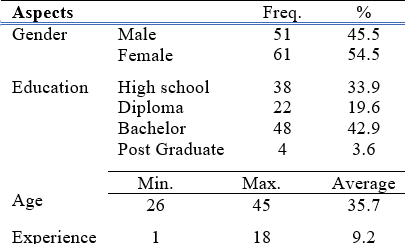
Source: Authors' data processing (2025).
Table sources should be provided directly below the table when applicable. Source notes should use Times New Roman, 12-point font, without bold or italics, except where required for specific statistical notation or terminology.
Figures
Figures, charts, diagrams, and research models must be numbered consecutively. Each figure should have a clear and informative title placed below the figure.
Example:
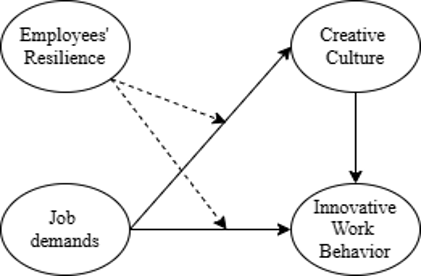
Figure 1. Research Model
Source: Authors' own illustration (2025).
All figures must be legible and of sufficient resolution for online publication. Authors must ensure that figures and tables are original or properly attributed and that any required permissions have been obtained.
5. Originality and Publication Ethics
JIEB is committed to maintaining academic integrity and ethical standards throughout the publication process. Submitted manuscripts must be original, properly referenced, and free from plagiarism and other forms of publication misconduct.
Authors must disclose relevant conflicts of interest and acknowledge funding sources where applicable. Any use of artificial intelligence or AI-assisted technologies must comply with the journal's applicable disclosure policy. Authors remain fully responsible for the accuracy, originality, and integrity of all content submitted for publication.
Manuscripts may be screened for similarity and evaluated for compliance with the journal's editorial and ethical requirements. Manuscripts that fail to meet these standards may be returned for correction or rejected in accordance with editorial policy.
6. Submission Procedure
Manuscripts must be submitted electronically through the official JIEB Open Journal Systems (OJS) platform:
Journal website: https://journal.unilak.ac.id/index.php/JIEB
Authors should complete the submission process by providing the required manuscript files, author information, metadata, and supporting documents requested by the system. Authors are encouraged to ensure that all submission information is complete and accurate before finalizing their submissions.
For editorial inquiries and submission-related assistance, authors may contact the editorial office at jieb@unilak.ac.id.
Submissions that do not comply with the journal's language, scope, formatting, originality, or documentation requirements may be returned to the authors for correction or declined for further consideration.
7. Editorial Authority
The editorial board reserves the right to evaluate submitted manuscripts for relevance, originality, methodological quality, academic contribution, and compliance with the journal's policies. The editors may request technical revisions, language corrections, or additional documentation as necessary.
Editorial decisions are made in accordance with the journal's editorial procedures and peer-review policies. Acceptance for publication is subject to the successful completion of the applicable editorial and review process.
By submitting a manuscript to JIEB, authors acknowledge their responsibility to comply with these editorial policies and writing guidelines.
8. Authorship Criteria and Responsibilities
Jurnal Ilmiah Ekonomi dan Bisnis (JIEB) upholds the principles of authorship transparency, accountability, and academic integrity. Authorship must reflect a genuine and substantial intellectual contribution to the research and manuscript. All individuals listed as authors must meet the journal's authorship criteria, approve the final version of the manuscript, and accept responsibility for the integrity of the work.
8.1. Authorship Eligibility
To qualify for authorship, each author must have made a substantial contribution to one or more of the following aspects of the research:
-
The conception or design of the study, or the acquisition, analysis, or interpretation of research data.
-
The drafting of the manuscript or its critical revision for important intellectual content.
-
The review and approval of the final version of the manuscript before submission or publication.
-
Agreement to be accountable for their contributions and to help ensure that questions concerning the accuracy or integrity of any part of the work are appropriately investigated and resolved.
All authors are expected to satisfy the applicable authorship criteria. Individuals who provide technical assistance, administrative support, funding, proofreading, or other contributions that do not meet the authorship requirements should be acknowledged appropriately rather than automatically listed as authors.
8.2. Avoid Ghost Authorship
JIEB strictly discourages ghost authorship, which occurs when an individual who has made a substantial contribution to the research or manuscript is omitted from the author list without appropriate acknowledgment or justification.
All individuals who meet the authorship criteria must be included in the manuscript's author list. Authors must not conceal the involvement of individuals who have made substantial intellectual contributions, including contributions to research design, data analysis, interpretation, or manuscript preparation.
If professional writing assistance, editorial assistance, or other external support has been used, the nature of that assistance must be disclosed transparently where appropriate. Such assistance does not automatically qualify an individual for authorship; eligibility depends on the person's actual contributions and fulfillment of the authorship criteria.
8.3. Avoid Guest, Gift, and Honorary Authorship
JIEB does not support guest, gift, or honorary authorship. These practices involve listing individuals as authors despite their failure to meet the applicable authorship criteria, for example, solely because of their seniority, position, institutional affiliation, supervisory role, or financial contribution.
Every listed author must have made a genuine scholarly contribution and must be able to explain and take responsibility for their role in the research. Authorship must not be granted solely to increase the perceived credibility of a manuscript or to acknowledge a person's status.
8.4. Author Contributions and Order
Authors are encouraged to clearly identify their individual contributions to the research. Where appropriate, the CRediT (Contributor Roles Taxonomy) framework may be used to describe contributions such as conceptualization, methodology, data curation, formal analysis, investigation, writing, review and editing, supervision, and project administration.
The order of authors should be agreed upon by all authors before submission. The corresponding author is responsible for ensuring that all authors have approved the author list, their affiliations, their contributions, and the final manuscript.
Any request to add, remove, or rearrange authors after submission must be supported by a clear explanation and the agreement of all affected authors. The editorial board may request additional documentation before considering such changes.
8.5. Corresponding Author Responsibilities
The corresponding author serves as the primary contact with the editorial office throughout the submission, peer-review, and publication processes. The corresponding author must ensure that:
-
All listed authors meet the journal's authorship criteria.
-
All authors have approved the submitted manuscript and agreed to its submission to JIEB.
-
No eligible contributor has been improperly excluded from the author list.
-
All relevant funding sources, conflicts of interest, and contributions are disclosed accurately.
-
Communications and revision requests from the editorial office are shared with the other authors as necessary.
8.6. Authorship Misconduct
Any suspected violation of authorship standards, including ghost authorship, guest authorship, gift authorship, unauthorized authorship changes, or disputes involving contributor recognition, may be investigated by the editorial board.
JIEB may request statements, contribution declarations, or other supporting documentation from the authors. Where misconduct is established, the journal may take appropriate action in accordance with its publication ethics policies, including rejection of the manuscript, suspension of the editorial process, correction of the published record, or other measures consistent with the circumstances and applicable ethical standards.
By submitting a manuscript to JIEB, all authors confirm that the author list accurately reflects the contributions made to the research and that no eligible author has been deliberately omitted.
9. MANUSCRIPT TYPES
Jurnal Ilmiah Ekonomi dan Bisnis (JIEB) primarily publishes original research articles that contribute to the advancement of knowledge in economics, accounting, finance, and business management. The journal welcomes rigorous empirical studies that address contemporary economic and business issues, particularly those relevant to Indonesia and other emerging economies. Manuscripts must be written in English, align with the journal's focus and scope, and demonstrate originality, methodological rigor, and clear theoretical or practical implications.
9.1. Original Research Articles
Original research articles constitute the primary manuscript type accepted by JIEB. These articles present original empirical findings using quantitative, qualitative, or mixed-methods approaches. Topics may include economic development, labor market participation, entrepreneurship and MSME performance, digital marketing, consumer behavior, financial technology, corporate finance, financial reporting, taxation, auditing, corporate governance, management accounting, organizational performance, and business sustainability.
Research may employ primary data collected through surveys, interviews, or observations, as well as secondary data obtained from financial statements, company reports, government publications, capital market databases, and other reliable sources. Appropriate analytical approaches may include regression analysis, structural equation modeling, panel data analysis, spatial analysis, and other methods suited to the research objectives and data characteristics.
All original research articles must clearly identify the research problem, establish a relevant theoretical foundation, explain the research methodology, present and interpret the findings, and demonstrate the contribution of the study to existing literature. Authors should also discuss the implications of their findings for economic development, business practices, financial decision-making, management strategies, or public policy, where applicable.
9.2. Review Articles
JIEB may consider review articles that provide a critical and systematic synthesis of existing scholarly literature in economics and business. Suitable submissions should employ a transparent review methodology, identify significant research patterns and gaps, and offer meaningful insights or directions for future research. Descriptive literature summaries without a clear analytical contribution are not encouraged.
9.3. Conceptual and Theoretical Articles
JIEB may consider conceptual and theoretical articles that develop, extend, or critically evaluate theories and frameworks relevant to economics, accounting, finance, and business management. Such manuscripts must provide a strong theoretical contribution, coherent scholarly arguments, and clear implications for future research or professional practice. Submissions must go beyond general opinions or descriptive discussions.
All manuscript types are subject to editorial screening and the applicable peer-review process. Submission does not guarantee acceptance. The editorial board determines the suitability of each manuscript based on its relevance to the journal's scope, originality, academic quality, methodological or analytical rigor, and contribution to the field.
JIEB prioritizes research that connects real-world economic and business challenges with rigorous academic analysis and meaningful implications for researchers, practitioners, business leaders, and policymakers.