Water balance optimization for strategic planting patterns and calendars in paddy (Oryza sativa L.) cultivation in rainfed regions
DOI:
https://doi.org/10.31849/jip.v21i2.19958Keywords:
water management, rainfed agriculture, crop scheduling, water deficit, rice productivityAbstract
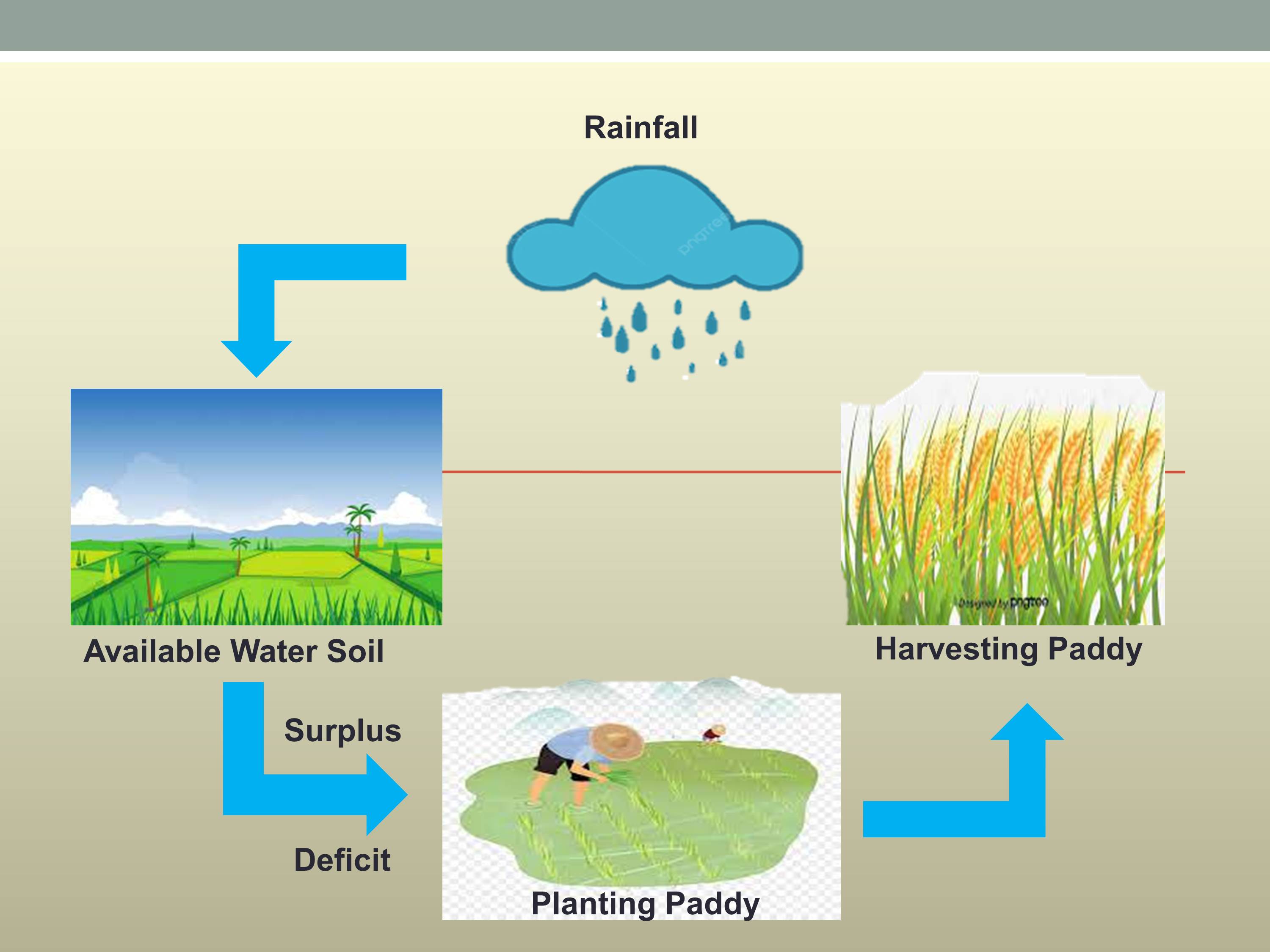
Paddy (Oryza sativa L.) is a staple food crop in Indonesia that requires more water compared to other annual crops. Cultivating paddy in rainfed areas necessitates effective water management to prevent crop failure, making it essential to calculate water balance, planting patterns, and planting calendars. This study aims to analyze the water balance in relation to planting patterns and calendars based on water availability in the field. The research was conducted in Cukilan Village, Semarang Regency, Indonesia. A descriptive quantitative method using Cropwat 8.0 was employed to determine water balance, planting patterns, and planting calendars. The results indicate that from November to April, there is a water surplus, while from May to October, there is a water deficit. Planting can be conducted once per growing season with two possible periods: November-March or December-April. During Period I (November-March), the water requirement is 640.7 mm with effective rainfall of 1031.2 mm. In Period II (December-April), the water requirement is 638 mm with effective rainfall of 935.7 mm. Planting should begin in November or December, with harvest in March or April. From May to October, the land remains fallow due to insufficient water availability. These findings are valuable for enhancing the effectiveness of paddy cultivation in rainfed areas, assisting farmers with planting planning, and minimizing the risk of crop failure due to water scarcity.
References
Ayu, I. W., S. Prijono, & Soemarno. (2013). Evaluasi Ketersediaan Air Tanah Lahan Kering Di Kecamatan Unter Iwes, Sumbawa Besar. J-Pal 4(1):18–25.
Bintoro, A., D. Widjajanto, & Isrun. (2017). Karakteristik Fisik Tanah Pada Beberapa. E-J. Agrotekbis 5(4):423–30.
FAO. (1997). The State of Food and Agriculture: The Agroprocessing Industry and Economic Development.
Fathnur, F. alam, T. Kunta, & M. Musyadik. (2021). Peran Analisis Neraca Air Untuk Perencanaan Pertanian Di Kabupaten Konawe Selatan. Jurnal Sumberdaya Lahan 15(1):46. doi: 10.21082/jsdl.v15n1.2021.46-56.
Handika, P. P. R., Sumiyati, & I. M. A. S. Wijaya2. (2015). Analisis Neraca Air Irigasi Untuk Tanaman Padi Pada Subak Jaka Sebagai Subak Natak Tiyis. Jurnal BETA (Biosistem Dan Teknik Pertanian) 3(2):1–11.
Hasnuri, F., M. Achmad, & S. Samsuar. (2019). Kebutuhan Air Tanaman Padi (Oryza Sativa) Sawah Tadah Hujan Berdasarkan Jadwal Tanam Hasil Musyawarah Tani Dan Katam Di Kecamatan Maniangpajo Kabupaten Wajo. Jurnal Agritechno 12(2):102–9. doi: 10.20956/at.v0i0.218.
Hilman, Y., S. Suciantini, & R. Rosliani. (2019). Adaptasi Tanaman Hortikultura Terhadap Perubahan Iklim Pada Lahan Kering. Jurnal Penelitian Dan Pengembangan Pertanian 38(1):55. doi: 10.21082/jp3.v38n1.2019.p55-64.
Kadiyala, D. M., J. W. Jones, & R. Mylavarapu. (2015). Study of Spatial Water Requirements of Rice under Various Crop Establishment Methods Using GIS and Crop Models Study of Spatial Water Requirements of Rice under Various Crop Establishment Methods Using GIS and Crop Models. (June).
Karim, H. A., & M. Aliyah. (2019). Evaluasi Penentuan Waktu Tanam Padi (Oriza Sativa L.) Berdasarkan Analisa Curah Hujan Dan Ketersediaan Air Pada Wilayah Bedungan Sekka-Sekka Kabupaten Polewali Mandar. AGROVITAL : Jurnal Ilmu Pertanian 3(2):41. doi: 10.35329/agrovital.v3i2.203.
Lu, D., Y. Zheng, X. Cao, J. Guan, W. Li, & K. Khan. (2024). Dynamic Changes in Terrestrial Water Balance Using Remote Sensing on the Loess Plateau. 1–17.
Mahlayeye, M., R. Darvishzadeh, & A. Nelson. (2022). Cropping Patterns of Annual Crops: A Remote Sensing Review. Remote Sensing 14(10). doi: 10.3390/rs14102404.
Mentang, R. S., T. Mananoma, & J. S. F. Sumarauw. (2017). Analisis Neraca Air Sungai Paniki Dengan Titik Tinjauan Di Jembatan Paniki. Jurnal Sipil Statik 5(3):123–32.
Mishra, B., L. Busetto, M. Boschetti, A. Laborte, & A. Nelson. (2021). RICA: A Rice Crop Calendar for Asia Based on MODIS Multi Year Data. International Journal of Applied Earth Observation and Geoinformation 103(September). doi: 10.1016/j.jag.2021.102471.
More, R. S., K. R. Manjunath, N. K. Jain, S. Panigrahy, & J. S. Parihar. (2016). Derivation of Rice Crop Calendar and Evaluation of Crop Phenometrics and Latitudinal Relationship for Major South and South-East Asian Countries: A Remote Sensing Approach. Computers and Electronics in Agriculture 127:336–50. doi: 10.1016/j.compag.2016.06.026.
Musyadik, Agussalim, & T. Masetyowati. (2014). Penentuan Masa Tanam Kedelai Berdasarkan Analisis Neraca Air Di Kabupaten Konawe Selatan , Sulawesi Tenggara. Jurnal Widyariset 17(2):277–82.
Paski, J. A. I., G. I. S. L. Faski, M. F. Handoyo, & D. A. S. Pertiwi. (2017). Analisis Neraca Air Lahan Untuk Tanaman Padi Dan Jagung Di Kota Bengkulu. Jurnal Ilmu Lingkungan 13(2):83–89.
Rahmadani, S., F. Nurrochmad, & J. Sujono. (2020). Analisis Sitem Pemberian Air Terhadap Tanah Sawah. Jurnal Pendidikan Teknik Bangunan Dan Sipil (2):66–75.
Shalsabillah, H., K. Amri, & G. Gunawan. (2018). Analisis Kebutuhan Air Irigasi Menggunakan Metode Cropwat Version 8.0. Jurnal Inersia 10(2):61–68.
Suryanto, A. (2019). Pola Tanam. Malang: UB Press.
Susilowati, & I. Sadad. (2015). Analisa Karakteristik Curah Hujan Di Kota Bandar Lampung. Jurnal Konstruksia 7(1):13–26.
Tentua, E. V., S. Laimeheriwa, & J. Patty. (2022). Analisis Musim Tanam Dan Pengaturan Pola Tanam Tanaman Pangan Pada Berbagai Kondisi Curah Hujan Di Daerah Amahai Kabupaten Maluku Tengah. JPK 6(1):23–37.
Vijayakumar, S., D. Kumar, N. Delhi, K. Ramesh, D. Jinger, & W. Conservation. (2022). Effect of Potassium Fertilization on Water Productivity , Irrigation Water Use Efficiency , and Grain Quality under Direct Seeded Rice-Wheat Cropping System. (March). doi: 10.1080/01904167.2022.2046071.
Widiyono, M. G. (2016). Analisis Neraca Air Metode Thornthwaite Mather Kaitannya Dalam Pemenuhan Kebutuhan Air Domestik Di Daerah Potensi Rawan Kekeringan Di Kecamatan Trowulan Kabupaten Mojokerto. Jurnal Swara Bhumi 1(1):10–17.
Wilnaldo, A., Y. S. Putra, & R. Adriat. (2020). Perbandingan Metode Perhitungan Evapotranspirasi Potensial Di Paloh Kabupaten Sambas Kalimantan Barat. Jurnal Prisma Fisika 8(3):165. doi: 10.26418/pf.v8i3.43618.