Physicochemical characterization of coconut shell liquid smoke and its potential as a natural preservative for fish balls
DOI:
https://doi.org/10.31849/jip.v22i1.23850Keywords:
coconut shell, fish ball, wood vinegar, natural preservative, torrefactionAbstract
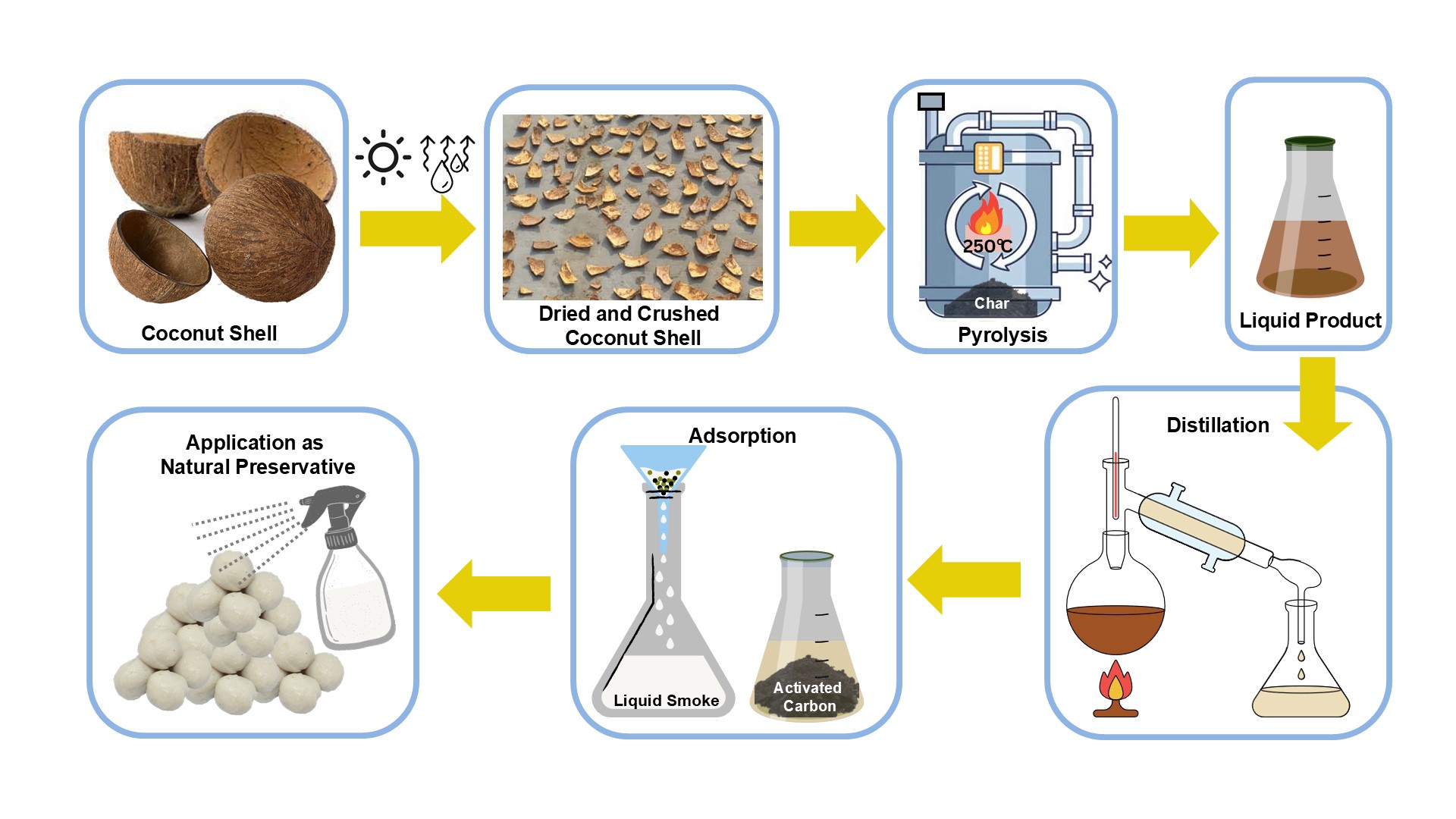
Synthetic preservatives in food products pose potential health risks and environmental concerns, leading to an increasing demand for natural alternatives. This study evaluates the physicochemical properties of liquid smoke derived from coconut shells and its potential as a natural preservative for fish balls. The production of liquid smoke involved torrefaction at 250°C, followed by purification through distillation and adsorption with activated carbon. The liquid smoke was characterized by a pH of 2.86, a density of 1.058 g/mL, and a total titratable acidity of 8.95%, meeting the Indonesian National Standard for Crude Lignocellulose Liquid Smoke (SNI 8985:2021). GC-MS analysis revealed that acetic acid (80.87%) and phenol (8.90%) were the predominant compounds, contributing to its antimicrobial properties. The efficacy of liquid smoke as a preservative was tested on fish balls at concentrations of 3%, 5%, and 7%. The best preservation effect was observed at 7% concentration, which resulted in the lowest total plate count (2.35 × 10⁶ CFU/g) after one day of storage at room temperature. These findings suggest that coconut shell-derived liquid smoke exhibits promising physicochemical characteristics and antimicrobial properties, making it a potential natural alternative to synthetic preservatives for food preservation.
References
Abdel-Naeem, H. H., Sallam, K. I., & Malak, N. M. (2021). Improvement of the microbial quality, antioxidant activity, phenolic and flavonoid contents, and shelf life of smoked herring (Clupea harengus) during frozen storage by using chitosan edible coating. Food Control, 130, 108317. https://doi.org/10.1016/j.foodcont.2021.108317
Abdullah, N. A., Putra, N., Hakim, I. I., & Koestoer, R. A. (2017). A review of improvements to the liquid collection system used in the pyrolysis process for producing liquid smoke. International Journal of Technology, 8(7), 1197-1206. https://doi.org/10.14716/ijtech.v8i7.745
Alamsyah, F. H., Irfan, & Dewi, Y. (2021). Penggunaan asap cair sebagai pengawet alami bakso ikan tuna sirip kuning (Thunnus albacares). Teknologi Pangan, 12(1): 103-109. https://doi.org/10.35891/tp.v12i1.2211
Al’farisi, C. D., Sunarno, S., Fadli, A., Mutamima, A., Azis, Y., Nurfatihayati, N., Utama, P.S., Suhendri, S., & Habib, A. A. Y. (2024). Edukasi bahan kimia berbahaya sebagai pengawet makanan di Kecamatan Tangkerang Timur, Pekanbaru, Riau. Jurnal Abdi Masyarakat Indonesia, 4(5), 1293-1298. https://doi.org/10.54082/jamsi.1331
Alfarisi, C. D., Sunarno, S., Mutamima, A., Fadli, A., Yenti, S. R., & Wisrayetti, W. (2023). Perancangan reaktor dan pelatihan pembuatan asap cair sebagai pengawet alami dalam pembuatan bakso. Jurnal Masyarakat Mandiri, 7(5), 5059-5068. https://doi.org/10.31764/jmm.v7i5.17414
Ali, M. A. S., Abdel-Moein, N. M., Owis, A. S., Ahmed, S. E., & Hanafy, E. A. (2024). Eco-friendly lignin nanoparticles as antioxidant and antimicrobial material for enhanced textile production. Scientific Reports, 14(1), 17470. https://doi.org/10.1038/s41598-024-67449-0
Anggraini, S. P. A. (2017). Teknologi asap cair dari tempurung kelapa, tongkol jagung, dan bambu sebagai penyempurna struktur kayu. Prosiding SENIATI, 3(2), D18-1. https://doi.org/10.36040/seniati.v3i2.1992
Arda, G., Diatmika, I. G. N. A. Y. A., & Kencana, P. K. D. (2019). Karakteristik asap cair batang bambu tabah (Gigantochloa nigrociliata BUSE-KURZ) yang dipirolisis pada suhu yang berbeda. Jurnal BETA (Biosistem dan Teknik Pertanian), 7(2):278-285. https://doi.org/10.24843/JBETA.2019.v07.i02.p07
Arundina, I., Budhy, T. I., Juliastuti, W. S., Surboyo, M. D. C., Halimah, A. N., & Lestari, P. (2022). The expression of interleukin-1β and nuclear factor erythroid-2 in the periodontitis after treatment of liquid smoke rice hull. Journal of Advanced Pharmaceutical Technology & Research, 13(2), 95-99. https://doi.org/10.4103/2231-4040.321508.
Badan Standardisasi Nasional [BSN]. (2021). SNI 8985:2021. Crude asap cair lignoselulosa sebagai bahan baku.
Badan Standardisasi Nasional [BSN]. (2017). SNI 7266:2017. Bakso ikan.
Cahyaningati, O., & Sulistiyati, T. D. (2019). Pengaruh penambahan tepung daun kelor (Moringa oleifera Lamk) terhadap kadar β-karoten dan organoleptik bakso ikan patin (Pangasius pangasius). Journal of Fisheries and Marine Research, 4(3), 345-351. https://doi.org/10.21776/ub.jfmr.2020.004.03.5
de Souza, T. S., & Kawaguti, H. Y. (2021). Cellulases, hemicellulases, and pectinases: Applications in the food and beverage industry. Food and Bioprocess Technology, 14(8), 1446-1477. https://doi.org/10.1007/s11947-021-02678-z
Dewi, F. C., Tuhuteru, S., Aladin, A., & Yani, D. S. (2021). Characteristics of liquid smoke of red fruit (Pandanus conoideus. L.) waste with pyrolysis method and potentially as biopesticide. Journal of Environmental and Agricultural Studies, 2(2), 81-86. https://doi.org/10.32996/jeas.2021.2.2.7
Fardiaz, M. A., & Rifqi, M. A. (2022). Utilization of coconut husk waste (Cocos nucifera Linn) as an environmentally friendly disinfectant material for the prevention of COVID-19. KESANS: International Journal of Health and Science, 2(1), 43-54. https://doi.org/10.54543/kesans.v2i1.116
Febriani, Y., Swastawati, F., & Fahmi, A. S. (2023). Effectiveness of liquid smoke as a preservative agent of barracuda fish cake during cold storage. IOP Conference Series: Earth and Environmental Science, 1224(1), 012033. IOP Publishing. https://doi.org/10.1088/1755-1315/1224/1/012033
Frida, E., Darnianti, & Noviyunida. (2018). Pembuatan asap cair dari limbah tongkol jagung dengan metode pirolisis yang digunakan sebagai pengawet pada ikan. JUITECH: Jurnal Ilmiah Fakultas Teknik Universitas Quality, 2(1): 35-41. http://dx.doi.org/10.36764/ju.v2i1.97
Handayani, A. S., Hartanto, S., & Sukmadi, I. (2020). Anti-microbial activity of liquid smoke as preservatives meatball. Empowerment in the Community, 1(2), 51-53. https://doi.org http://dx.doi.org/10.31543/ecj.v1i2.361/
Izza, N., Putra, A., & Amalia, Z. (2022). Pembuatan asap cair (liquid smoke) dari limbah serbuk kayu jati dan kayu pinus secara pirolisis sebagai pengawet alami. Jurnal Teknologi, 22(2): 104-112. http://dx.doi.org/10.30811/teknologi.v22i2.3130
Nasruddin, N. (2015). Karakteristik asap cair yang ditambahkan ekstrak aroma daun pandan wangi (Pandanus amaryllifolius Roxb.). Jurnal Dinamika Penelitian Industri, 26(1), 19-31.
Maulina, S., & br Karo, E. O. (2021). Improving the quality of liquid smoke from pyrolysis of oil palm fronds with the adsorption–distillation purification process. IOP Conference Series: Materials Science and Engineering, 1122(1), 012101. https://doi.org/10.1088/1757-899X/1122/1/012101
Mutamima, A., Sunarno, S., Purnama, I., Alfarisi, C. D., Fadli, A., Yenti, S. R., & Barus, S. D. A. (2024). Optimizing coconut shell liquid smoke as a natural preservative in advancing meatball production. Dinamisia: Jurnal Pengabdian Kepada Masyarakat, 8(2), 562-569. https://doi.org/10.31849/dinamisia.v8i2.18223
Pamori, R., Efendi, R., & Restuhadi, F. (2015). Karakteristik asap cair dari proses pirolisis limbah sabut kelapa muda. SAGU, 14(2): 43-50
Parnanto, N. H. R., & Atmaka, W. (2010). Diversifikasi dan karakterisasi citarasa bakso ikan tenggiri (Scomberomus commerson) dengan penambahan asap cair tempurung kelapa. Jurnal Teknologi Hasil Pertanian, 3(1), 1-12. https://doi.org/10.20961/jthp.v0i0.13612
Permanasari, A. R., Ulfa, A. M., Suciati, R. N., Nurcahyo, Keryanti, Sihombing, R. P., Yulistiani, F., & Wibisono, W. (2020). The pyrolysis reactor design and the effect of liquid smoke from coconut shell on microbial contamination of tofu. International Journal Applied Technology Research, 1(2), 128-139. https://doi.org/10.35313/ijatr.v1i2.28
Purnama, I., Lestari, S. D., Lidar, S., Mutamima, A., Suri, A., Nelvia, N., & Malhat, F. M. (2024). Effectiveness of wood vinegar from torrefied coconut shells as an eco-friendly pesticide against fall armyworm (Spodoptera frugiperda JE Smith). E3S Web of Conferences, 593, 03004. https://doi.org/10.1051/e3sconf/202459303004
Rasi, A. J. L., & Seda, Y. P. (2017). Potensi teknologi asap cair tempurung kelapa terhadap keamanan pangan. Jurnal Penelitian Teknik Sipil dan Teknik Kimia, 1(1): 1-10.
Risfaheri, R., Hoerudin, H., & Syakir, M. (2018). Utilization of rice husk for production of multifunctional liquid smoke. Journal of Advanced Agricultural Technologies, 5(3). https://doi.org/10.18178/joaat.5.3.192-197
Sahrum, R. P., Syaiful, A. Z., & Gazali, A. (2021). Uji kualitas asap cair tempurung kelapa dan serbuk gergaji kayu metode pirolisis. SAINTIS, 2(2):72-78.
Sunarno, Fadli, A., Padil, Alfarisi, C.D., & Mutamima, A. (2024a). Pembuatan Asap Cair dan Aplikasinya. Taman Karya
Sunarno, S., Padil, P., Mutamima, A., Nurfatihayati, N., Sitanggang, J., Aritonang, V. W., & Utama, P. S. (2024b). Co-pyrolysis of oil palm empty fruit bunches (EFB) biochar with high-density polyethylene (HDPE) for liquid fuel production. E3S Web of Conferences, 593, 09002. https://doi.org/10.1051/e3sconf/202459309002
Tuesta-Chavez, T., Monteza, J., Jaimes, M. I. S., Ruiz-Pacco, G. A., Changanaqui, K., Espinoza–Suarez, J. B., Alarcon, H., Osorio–Anaya, A.M., Valderrama–Negrón, A.C., & Sotomayor, M. D. (2022). Characterization and evaluation of antioxidant and antimicrobial capacity of prepared liquid smoke-loaded chitosan nanoparticles. Journal of Food Engineering, 319, 110912. https://doi.org/10.1016/j.jfoodeng.2021.110912
Wali, M. K., & Abed, M. M. (2019). Antibacterial activity of acetic acid against different types of bacteria causes food spoilage. Plant Archives, 19(1):1827-1831
Zuraida, I., Hasbullah, R., Budijanto, S., & Prabawati, S. (2009). Aktivitas antibakteri asap cair dan daya awetnya terhadap bakso ikan. Jurnal Ilmu Pertanian Indonesia, 14(1), 41-49.